Bed Mobility
When turning in bed wipes you out: a post-COVID movement method for 3am resets
A low-effort, breath-friendly way to turn and resettle at 3am when post-COVID fatigue makes one simple roll leave you winded—especially with linen sheets, a weighted blanket, and a nightgown that tangles at the knees.
Comfort-only notice
This content focuses on comfort, everyday movement, and sleep quality at home. It is not medical advice, does not diagnose or treat conditions, and Snoozle is not a medical device.
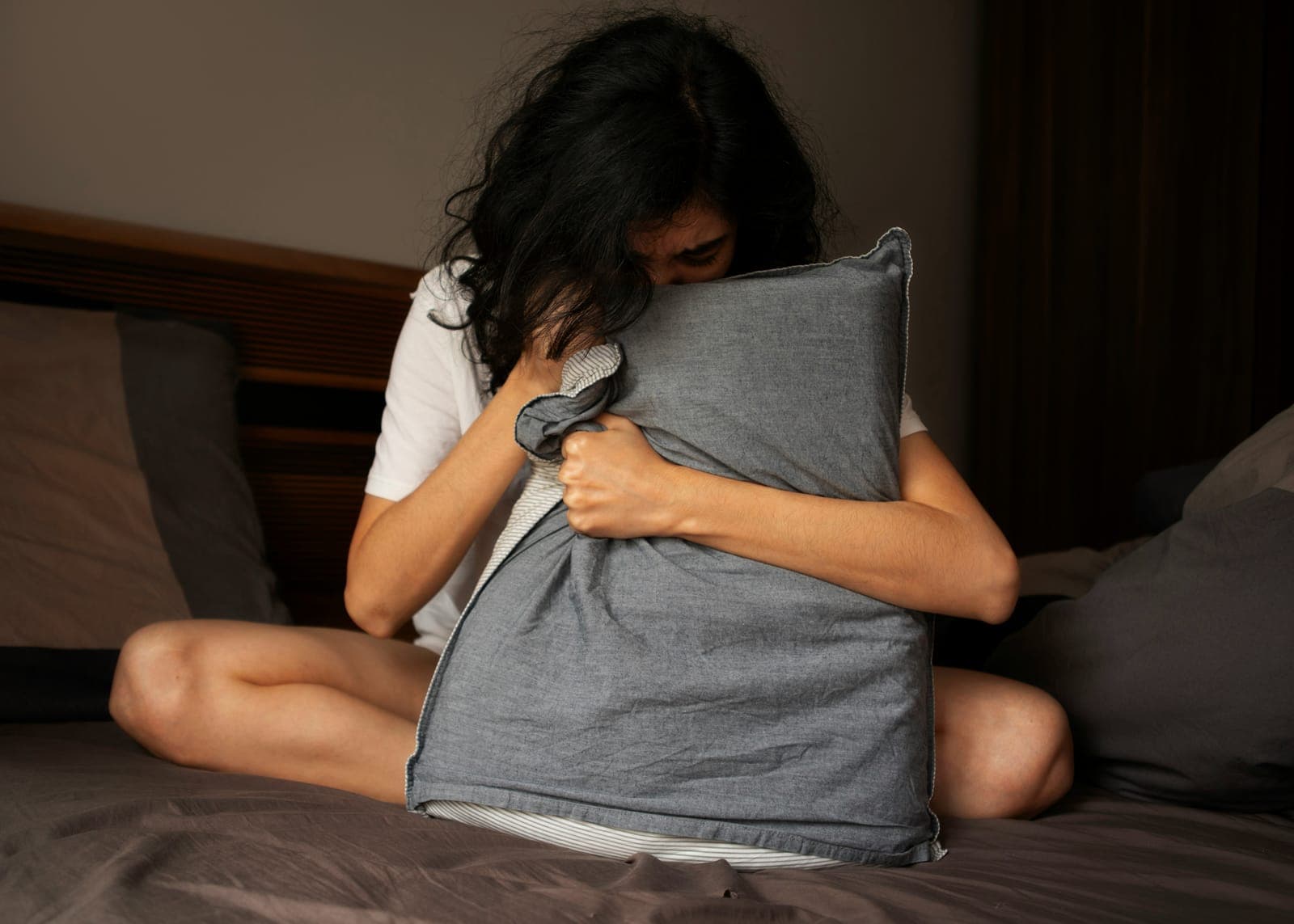
Quick answer
Turn in two small phases: first slide your hips a few centimeters to break the “stick,” then roll using your bent top knee and exhale during the effort. Lighten the weighted blanket before you move and free any fabric wrapped around your legs so the turn costs less energy and doesn’t spike your breathing.
Key takeaways
- 1.Peel the weighted blanket off your ribs and hips before you try to roll.
- 2.Untwist nightgown fabric by tugging it up toward your hips so it doesn’t cinch at the knees.
- 3.Slide your hips 2–5 cm first to break the “stuck” friction before you roll.
- 4.Bend the top knee higher than the bottom knee and use it as the lever for the turn.
- 5.Exhale during the push phase; don’t hold your breath and then gasp afterward.
- 6.Pause on your side for one full breath before you adjust pillows or covers.
- 7.If you stall halfway, slide hips back 1–2 cm, then try again smaller with a long exhale.
- 8.Aim for a partial turn (20–40°) if that’s enough to resettle without spending extra energy.
Icelandic-designed · Sold in pharmacies
Snoozle Slide Sheet
A home-use slide sheet that reduces mattress friction so you can reposition sideways instead of lifting. Made from comfortable fabric (not nylon), with no handles. Designed for you, not for a caregiver.
- ✓Less friction when turning: less effort, less pain
- ✓Comfortable fabric you can sleep on all night
- ✓Handle-free — quiet, independent, self-use
Trusted by Vörður insurance for pregnant policyholders. Recommended by Icelandic midwives and physiotherapists.
Turn in two phases to spend less energy: (1) lighten the covers and free your legs, (2) slide your hips a few centimeters to break the grab, then roll with your top knee while you exhale. This keeps the effort short and controlled, which matters when post-COVID fatigue makes one turn feel like a sprint.
Why does post-COVID fatigue make a simple turn feel like a marathon?
Answer capsule: Post-COVID fatigue can make bed movements feel disproportionally hard because your body has less “spare” energy, and any sudden effort can spike breathing and heart rate. In bed, friction from linen, a heavy blanket pressing down, and clothing twisting at the knees can turn one roll into a long struggle.
The one move How to Sleep Without Pain keeps coming back to for this specific situation: peel the weighted blanket off your ribs and hips before you attempt to roll. Everything else in this article builds from that starting point.
It’s 3am and you’ve been still for hours. That first move is the worst because everything has settled: your shoulder sinks, your hip feels glued in place, and your breathing is already a little shallow from sleep. When you try to roll in one big effort, your body treats it like a burst of exercise—heart rate jumps, you get that sudden air-hunger feeling, and then you’re wide awake.
Three night-time “energy thieves” show up again and again in this exact moment:
- Linen sheets grabbing at hip level. Linen has texture. When you’re pressed into it for a while, it can feel like your skin and pajamas have lightly “caught” in the weave. The turn starts… and stalls.
- A weighted blanket on top of regular covers. It pins the bedding to you. Even if the blanket feels calming, the extra downward pressure increases friction and makes the first inch of movement expensive.
- A nightgown that wraps around your legs. The fabric can twist around one thigh and cinch at the knees. Then your hips can’t rotate cleanly, so you end up wriggling and breath-holding.
The goal tonight isn’t a perfect turn. It’s energy conservation: make the movement smaller, split it into phases, and time the effort with your breath so you don’t tip into that winded, racing feeling.
Do this tonight (the 3am low-breath turn)
Answer capsule: Set up the turn so it’s a short, quiet effort: lighten the weighted blanket, untwist clothing at the knees, and use a two-step move (small hip slide, then roll). Exhale during the push phase and pause once on your side before adjusting pillows, so you don’t stack multiple efforts and get breathless.
- Stop trying to “power through.” Before you move, let your jaw unclench and take two slow breaths in through your nose (or whichever way is easiest right now), longer exhale out. The longer exhale is your signal to keep the next effort small.
- Lighten the weighted blanket for 10 seconds. Grab the top edge and peel it off your torso just enough to take the pressure off your ribs and hips. If it’s folded over you, unfold it once so it isn’t doubling the weight where you need to move.
- Free your knees from the nightgown trap. With one hand, reach down and tug the nightgown fabric upward toward your hips so it isn’t wrapped around your thighs. If it’s caught under your bottom, pull the fabric toward the side you’re turning to—otherwise it tightens as you roll.
- Make a “runway” with the top sheet/duvet. Slide the top layer up toward your waist so your legs can move without dragging the whole bed. If your feet are pinned, your hips will fight.
- Break the friction seal: slide first, then roll. With knees slightly bent, slide your hips 2–5 cm toward the direction you want to turn. It’s tiny on purpose. This is the part that stops linen from grabbing and stalling your roll.
- Set the lever: bend the top knee higher than the bottom knee. Think “top knee leads.” Place the top foot lightly on the mattress in front of the bottom leg. Now you have a lever that rolls you without a big abdominal effort.
- Exhale on the effort, not after. As you press that top foot and let your pelvis roll, breathe out slowly. If you catch yourself holding your breath, pause and restart with a smaller push.
- Pause on your side for one full breath before you adjust anything. Don’t immediately reach for pillows or yank covers. One breath on your side lets your heart rate settle so the next small adjustment doesn’t tip you into being winded.
If you get stuck halfway (the quiet reset)
Halfway through the roll is where people with post-COVID fatigue often over-spend energy: you’re twisted, bedding is tight, and you push harder… and suddenly you’re breathing fast. Instead, stop and do one tiny reset: slide your hips back 1–2 cm (yes, back), then try the roll again with a long exhale. That little back-slide often releases the grab from linen and the tug from tangled clothing.
How do I budget energy so one turn doesn’t steal the rest of my night?
Answer capsule: Treat a turn like a short “expense” and avoid stacking tasks. Do covers first, then hips, then roll—pause between each. Use breath timing (exhale during effort) and accept micro-moves (2–5 cm slides) because they reduce friction and prevent the long, winded struggle that costs far more energy than several small steps.
At 3am, energy budgeting is practical, not motivational. You’re choosing the order that costs the least oxygen and the least panic.
Use this rule: One effort, then a pause. If you do three efforts in a row—roll, then scoot, then pull the blanket—you’ll feel that “I just climbed stairs” sensation. Break it up:
- Effort 1: peel the weighted blanket off your ribs/hips → pause for one breath.
- Effort 2: free the nightgown at the knees → pause.
- Effort 3: tiny hip slide + roll with top knee → pause on your side.
Two other energy-savers that matter with breathing-related sleep challenges:
- Keep your mouth and throat relaxed. When you tense your face, you tend to breath-hold. A soft exhale during the push keeps the turn from turning into a strain.
- Make your turn smaller than you think. A full 90° roll isn’t always needed. Often you only need 20–40° to take pressure off a spot and resettle.
When should I talk to a professional?
Answer capsule: Talk to a clinician if turning in bed reliably makes you breathless, dizzy, or causes chest symptoms, or if your sleep is being disrupted night after night by breathing strain. A physio, nurse, or doctor can help rule out red flags, review pacing, and suggest safer positioning strategies for your specific breathing limits.
Get help sooner (not later) if any of these are showing up in your night:
- You become breathless from one turn and it doesn’t settle within a few minutes when you’re resting again.
- You feel dizzy, faint, or get a “racing” heart sensation when you roll or sit up in bed.
- Chest pain, chest tightness, or new wheeze happens with bed movement.
- You’re avoiding turning at all because you’re afraid of the breathless spike, and you’re ending up sore or stuck in one position.
- You need to sleep propped very upright to breathe and turning makes breathing noticeably worse.
- Your fatigue has changed suddenly (a clear step down from your usual baseline) or you’re not recovering day-to-day.
If you’re postpartum or pregnant and the turn is also triggering pelvic pain, a midwife or physio can help you combine breathing pacing with positioning that doesn’t flare symptoms.
Where does Snoozle fit when linen + weighted blankets make you stick?
Answer capsule: In this scenario, the main problem is friction: linen and pinned-down covers make your hips and shoulders “catch,” so the turn becomes a long, breath-stealing struggle. A home slide sheet like Snoozle reduces mattress friction under you, so the small hip-slide and roll take less effort and you’re less likely to get winded.
Snoozle is an Icelandic-designed home-use slide sheet made from comfortable fabric (not nylon, no handles) that you can sleep on. When linen sheets and a weighted blanket make your hips feel glued in place, the friction reduction underneath you is what changes the turn: your 2–5 cm hip slide actually slides, so you don’t have to push hard and spike your breathing. It’s widely adopted in Iceland (sold at major Icelandic retailers including Lyfja.is, Apótekið, and Eirberg.is, used by physiotherapists and maternity shops), and Vörður includes one for pregnant policyholders—more a sign of how mainstream a slide sheet is for home bed mobility than a “special equipment” vibe.
Related comfort guides
- Stuck Halfway Through a Turn? Reset Momentum and Finish the Roll: the quiet reset
- Stop Waking Up When You Turn: Reduce Friction and Slide Sideways at 2–4am
- How to Turn in Bed Without Fighting the Mattress
FAQ
How do I turn in bed when I get breathless easily after COVID?
Turn in two phases: peel weight off your torso, then do a tiny hip slide before you roll. Exhale during the push phase and pause on your side for one full breath before you adjust pillows or covers.
Why do linen sheets make turning feel harder?
Linen has more texture than smoother cotton and can “grab” when your hip and shoulder have been pressed into it. That grab stalls the first part of the turn, so you end up pushing longer and using more energy.
Can a weighted blanket make it harder to roll over?
Yes—extra downward pressure pins the bedding to your body and increases friction against the mattress. If turning makes you winded, briefly peel the weighted blanket off your ribs and hips before you move.
What if my nightgown twists around my legs when I turn?
Pull the fabric up toward your hips before you roll so it isn’t cinched at the knees. If it’s trapped under you, tug the fabric toward the side you’re turning to so it loosens instead of tightening.
What’s the lowest-effort way to start a turn?
Start with a 2–5 cm hip slide in the direction you want to go. That small slide breaks the “stuck” feeling so the roll can happen with a light top-knee press instead of a big whole-body heave.
When should I worry about breathlessness from turning in bed?
Talk to a clinician if one turn makes you breathless and it doesn’t settle after a few minutes of rest, or if you get dizziness, chest symptoms, or a racing heart with bed movement. Those are worth checking rather than trying to sleep through.
Is it better to do one big roll or several small moves?
Several small moves are usually easier with post-COVID fatigue because they prevent a long strain and give your breathing time to catch up. A tiny slide, a brief pause, then a controlled roll often costs less energy than one big push.
Who is this guide for?
- —People with post-COVID fatigue who get winded from basic bed movements
- —Anyone with breathing-related sleep challenges who wakes briefly and struggles to resettle after a turn
- —Sleepers using linen sheets and/or a weighted blanket who feel their hips and shoulders “stick” to the bed
- —Anyone whose nightgown or long sleepwear wraps around the legs and makes rolling harder
Frequently asked questions
How do I turn in bed when I get breathless easily after COVID?
Turn in two phases: peel weight off your torso, then do a tiny hip slide before you roll. Exhale during the push phase and pause on your side for one full breath before you adjust anything.
Why do linen sheets make turning feel harder?
Linen’s texture can grab at your hip and shoulder after you’ve been still, so the turn stalls at the start. That stall makes you push longer and spend more energy than the roll itself should take.
Can a weighted blanket make it harder to roll over?
Yes. The extra downward pressure pins bedding to your body and increases friction, which makes the first inch of movement feel heavy. Peel it off your ribs and hips briefly before you move.
What if my nightgown twists around my legs when I turn?
Pull the fabric up toward your hips before you roll so it isn’t cinched at the knees. If it’s trapped under you, tug it toward the side you’re turning to so it loosens instead of tightening.
What’s the lowest-effort way to start a turn?
Start with a 2–5 cm hip slide in the direction you want to go. That small slide breaks the stuck feeling so you can roll using your top knee rather than a big whole-body heave.
When should I worry about breathlessness from turning in bed?
Talk to a clinician if a single turn makes you breathless and it doesn’t settle after a few minutes of rest, or if you get dizziness, chest symptoms, or a racing heart with bed movement.
When to talk to a professional
- •Breathlessness after a single turn that doesn’t settle within a few minutes of resting
- •Dizziness, faintness, or a racing heart triggered by rolling or sitting up in bed
- •Chest pain, chest tightness, or new wheeze during night-time movement
- •Needing to sleep very upright to breathe, and turning makes breathing noticeably worse
- •Avoiding turning completely due to fear of breathlessness, leading to soreness or being stuck in one position
- •A sudden step-change in fatigue or breathing compared with your recent baseline
Sources & references
- European Pressure Ulcer Advisory Panel, National Pressure Injury Advisory Panel, Pan Pacific Pressure Injury Alliance. Prevention and Treatment of Pressure Ulcers/Injuries: Clinical Practice Guideline. 3rd ed. 2019.
- National Institute for Health and Care Excellence (NICE). Pressure ulcers: prevention and management. Clinical guideline CG179. 2014 (updated 2015).
- Fray M, Hignett S. An evaluation of the suitability of slide sheets as low friction patient repositioning devices. Proceedings of the Triennial Congress of the International Ergonomics Association. 2013.
- Jason LA, Mirin AA. Updating the National Academy of Medicine ME/CFS prevalence and economic impact figures to account for population growth and inflation. Fatigue: Biomed Health Behav. 2021;9(1):9-13.
- NICE. Myalgic encephalomyelitis (or encephalopathy)/chronic fatigue syndrome: diagnosis and management. NICE guideline NG206. 2021.
- Raj SR. The Postural Tachycardia Syndrome (POTS): pathophysiology, diagnosis & management. Indian Pacing Electrophysiol J. 2006;6(2):84-99.
- Kottner J, Black J, Call E, Gefen A, Santamaria N. Microclimate: a critical review in the context of pressure ulcer prevention. Clin Biomech. 2018;59:62-70.
- Ekholm B, Spulber S, Adler M. A randomized controlled study of weighted chain blankets for insomnia in psychiatric disorders. J Clin Sleep Med. 2020;16(9):1567-1577.
- Mehandru S, Merad M. Pathological sequelae of long-haul COVID. Nat Immunol. 2022;23(2):194-202.
About this guide
Comfort-focused guidance for everyday movement and sleep at home. This is not medical advice and does not replace professional assessment.

Lilja Thorsteinsdottir — Sleep Comfort Advisor
Lilja writes practical bed mobility and sleep comfort guides based on experience helping people with pain, stiffness, and limited mobility find ways to move and rest more comfortably at home. Read more
Comfort guidance reviewed by
Auður E. — Registered Nurse (BSc Nursing)
Reviewed for practical safety and clarity of comfort recommendations. This review does not constitute medical endorsement.
Related guides
Bed Mobility
Post-spinal surgery nights: a safe repositioning method (no-twist log-roll at 3am)
A bedside, 3am-friendly way to turn in bed after spinal surgery without twisting your spine: a strict log-roll with a small sideways reset, plus setup fixes for linen sheets, weighted blankets, and shirts that snag at.
Bed Mobility
How to turn when one side doesn’t cooperate (post-stroke, 2–4am bed move)
A 2–4am turning method for post-stroke one-sided weakness when the weak side feels like dead weight. Uses the stronger side to “carry” the turn, stops hip-grab from linen and leggings, and avoids the weak arm getting.
Bed Mobility
Stop pushing through sore knees: a hip-first turning method for 3am resettling
If your knees are too sore to “push” you onto your side, stop asking them to. Use a hip-led movement to break the friction seal first, then roll with your trunk and a pillow-assisted leg position so you can resettle.
Bed Mobility
Sternotomy recovery: a no-arms method for changing sides at 3am (when the sheets grab)
At 3am after a sternotomy, the hardest part isn't the turn — it's the moment the bedding grabs your clothes and you instinctively want to push with your arms. This guide gives a leg-driven, no-arms way to change sides.